





Hiring a personal trainer is a meaningful investment — in both money and trust. A good trainer can substantially accelerate your progress, help you train safely, provide accountability on difficult days, and develop a programme genuinely tailored to your physiology, lifestyle, and goals. A poor match, however, can leave you out of pocket, uninspired, or — in the worst cases — injured through inappropriate programming or inadequate supervision.
The UK fitness industry is large and varied. The barriers to entry for personal trainers are lower than many people assume, and qualifications, experience, and expertise vary considerably between practitioners. Knowing what to look for and what to ask before committing to regular sessions gives you a significant advantage in finding a trainer who is genuinely the right fit.
Why Qualifications and Insurance Matter — and What to Check
Personal training in the UK is not a regulated profession in the sense that medicine or physiotherapy is — there is no single statutory body that licenses practitioners, and it is technically possible for someone to operate as a personal trainer without formal qualifications. For this reason, verifying qualifications and professional registration independently is an important step rather than an assumption.
The baseline qualification widely recognised in the UK fitness industry is a Level 3 Certificate in Personal Training, which builds on a Level 2 gym instructor qualification. This represents the minimum expected standard for a practicing personal trainer. Higher-level qualifications, specialist certifications in areas such as strength and conditioning, nutrition, rehabilitation, pre- and postnatal exercise, or working with older adults are indicators of additional expertise but should be verified rather than taken at face value.
Two professional registers provide a reliable verification route. CIMSPA — the Chartered Institute for the Management of Sport and Physical Activity — is the professional development body for the UK sports and physical activity sector. REPs — the Register of Exercise Professionals — maintains a searchable database of fitness professionals who have verified qualifications and commit to continuing professional development. Searching either register before engaging a trainer provides confirmation of their standing.
Public liability insurance is non-negotiable for any professional personal trainer. This protects both the trainer and the client in the event of injury or damage occurring during a session. Any reputable trainer should be able to provide evidence of current insurance immediately upon request. If a trainer is unwilling or unable to do so, this is a clear signal to look elsewhere.
CIMSPA's directory is searchable at cimspa.co.uk/find-a-professional, and REPs' register at exerciseregister.org.
Questions to Ask in a First Consultation
A competent, professional personal trainer will expect and welcome questions in an initial consultation. This meeting — which most trainers offer without charge — is as much an opportunity for the client to assess the trainer as it is the reverse. Arriving with a clear set of questions makes the process more efficient and ensures the conversation covers everything that matters.
What are your qualifications, and are you registered with CIMSPA or REPs? This should be the opening question and should be accompanied by a request to see evidence rather than relying on a verbal answer.
Do you have experience working with clients who have similar goals to mine? A trainer who primarily works with competitive athletes may not be the best match for someone whose goal is general health improvement. Specific experience relevant to your circumstances is more valuable than general credentials.
How do you structure your programmes, and how frequently would you reassess my progress? A well-structured programme should include an initial fitness assessment, regular reassessments, and progressive variation in training stimulus. A trainer who offers a fixed programme without individual assessment is a potential concern.
What is your approach to nutrition guidance? Personal trainers are not dietitians and should not provide detailed clinical nutrition advice. A trainer who positions themselves as a nutrition expert beyond the scope of general, evidence-based healthy eating guidance may be exceeding their professional competence.
What happens if I need to cancel a session? Understanding the cancellation and rescheduling policy before signing any agreement prevents disputes later. Look for policies that are reasonable for both parties.
Online vs. In-Person: How to Decide What Works for You
The choice between online personal training and in-person coaching is now a genuinely meaningful decision, with both formats offering distinct advantages depending on your circumstances and preferences.
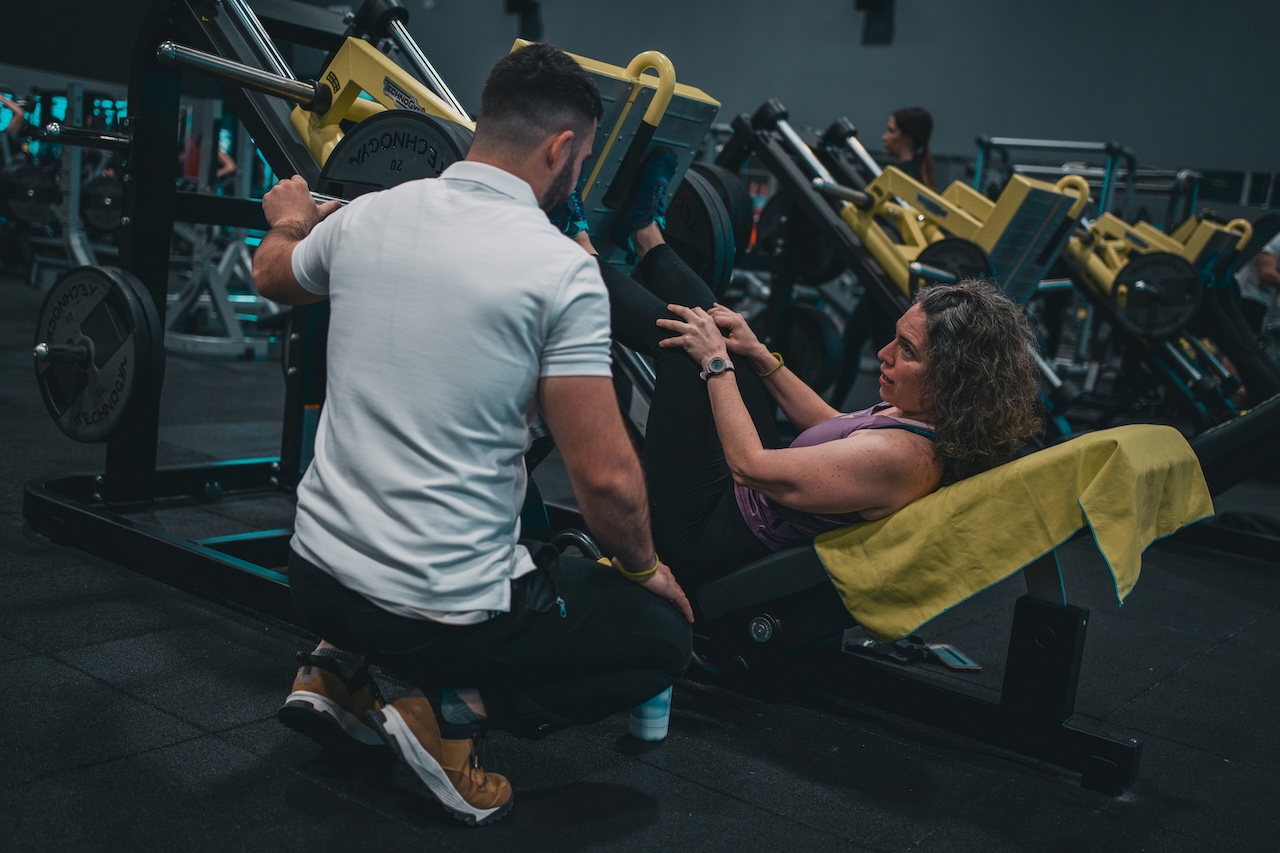
In-person training offers direct supervision of technique, real-time correction of form, and the kind of personal motivation that a physical presence provides. It is particularly valuable for beginners who are learning fundamental movement patterns for the first time, individuals returning from injury, or anyone who knows they perform better with external accountability in a physical context. Session costs tend to be higher, particularly in London and major cities.
Online personal training — typically involving a programme delivered digitally, with video check-ins and messaging support — offers considerably greater flexibility and lower cost. It is well-suited to those with variable schedules, irregular travel, or who live in areas where access to experienced in-person trainers is limited. The quality of online coaching varies enormously, however, and the reduced oversight means it is less appropriate for complete beginners or those with complex physical needs.
A hybrid model — primarily digital programming with periodic in-person sessions for technique assessment — is a practical middle ground that balances cost, flexibility, and quality of coaching for many people. Some trainers offer this explicitly; it is also worth proposing if it better suits your needs.
Red Flags That Suggest a Trainer Is Not the Right Fit
Several behaviours or presentation characteristics suggest a personal trainer may not be the right choice, irrespective of other factors.
Guarantee language. Any trainer who guarantees specific physical outcomes — a certain amount of weight lost in a defined period, a specific physique result — is making a promise that the evidence of individual physiological variation does not support. Outcomes depend on many factors beyond the training session itself. Good trainers set process-focused expectations, not outcome guarantees.
Dismissiveness about health history. A responsible trainer will ask detailed questions about your medical history, any injuries, current medications, and physical limitations before designing a programme. A trainer who begins programming without this information, or who waves away health disclosures as irrelevant, is not practising safely.
Excessive supplement promotion. While personal trainers may have general familiarity with commonly used supplements, a trainer who actively sells or strongly promotes specific products as essential components of a programme may have a financial interest that conflicts with your best interests. Nutritional support should be addressed by registered professionals where it goes beyond general healthy eating guidance.
Inability to explain the purpose of exercises. A qualified trainer should be able to articulate clearly why each exercise is included in your programme, what it is developing, and how it fits within your overall goals. Vague or evasive responses to this question suggest a deficit in the technical knowledge expected at professional level.
Finding the right personal trainer takes a small amount of research and a confident first consultation, but the return on that investment — in results, safety, and motivation — is substantial. Take the time to verify, question, and compare before committing.







.svg)